
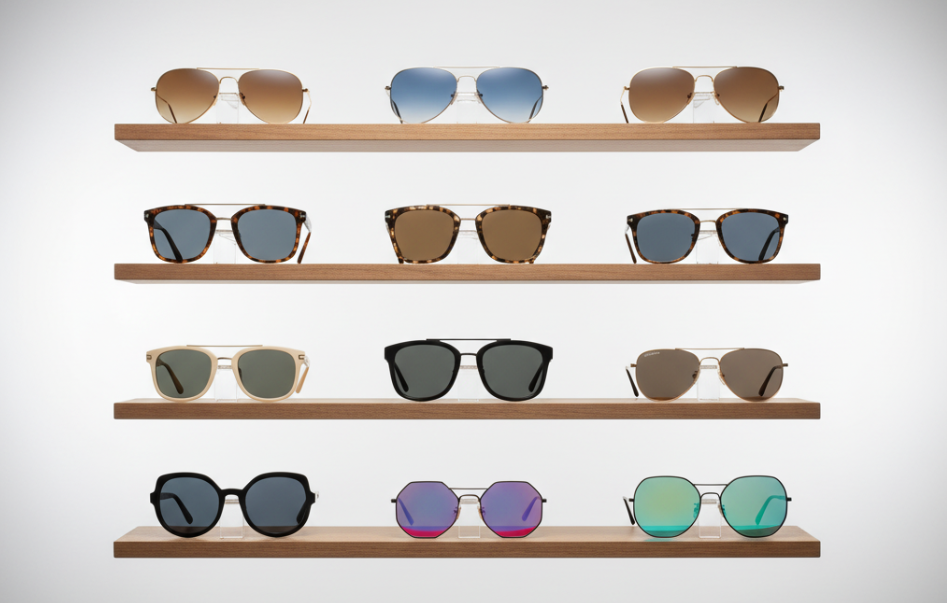
When I first entered the eyewear industry, I faced a huge map of China, completely bewildered. I wanted to find the most suitable sunglasses suppliers for my clients, but it felt like looking for a needle in a haystack. One wrong choice could mean a massive waste of time, money, and opportunity.
China's sunglasses industry is highly concentrated in its coastal regions, forming distinct industrial clusters. Zhejiang province (Taizhou, Wenzhou) is the global "King of Volume," dominating the mass market; Guangdong province (Shenzhen, Dongguan) is the "Quality Benchmark," specializing in mid-to-high-end and luxury brands1; while regions like Fujian, Jiangsu, and Jiangxi are key "squad members" with their own unique specialties.
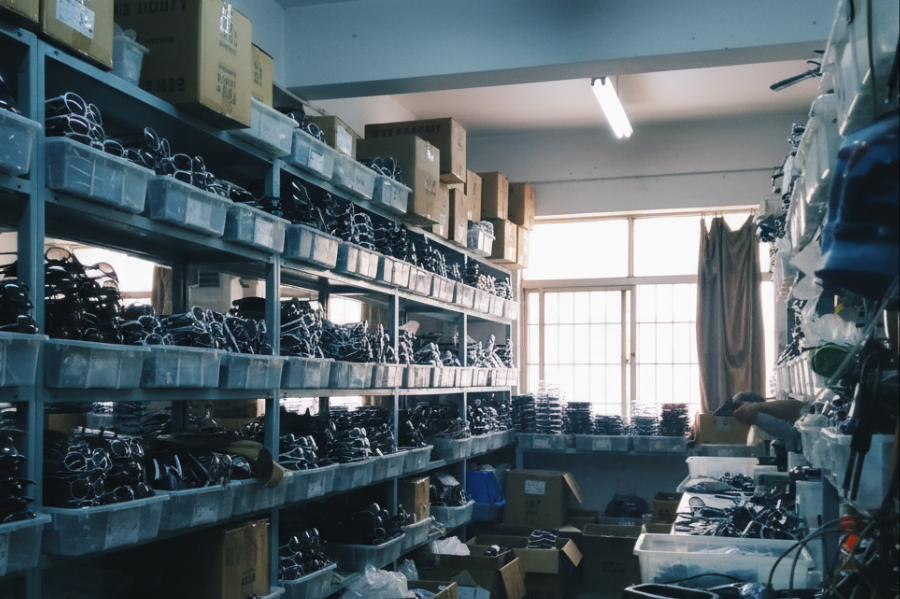
To truly understand this landscape, I spent countless hours not just poring over dry export data2 and industry reports, but also having in-depth conversations with front-line professionals in these regions. I discovered that each manufacturing hub has its own industrial DNA and personality. Understanding these "personalities" is the first and most critical step to building a supply chain that is efficient, reliable, and perfectly aligned with your brand's positioning. Now, I want to share this "industry map" and my insights with you.
Why is Zhejiang Considered the "Engine Room" of the Global Sunglasses Industry?
Your business model is fast fashion, defined by "speed, precision, and impact." You need a partner who can handle massive orders at an extremely competitive price and in the shortest possible time. Facing countless factories in China, how do you pinpoint this "super engine"?
Zhejiang province is the undisputed engine of the global sunglasses industry, contributing nearly 40% of China's total exports. Its core cities—Taizhou's Duqiao and Linhai—focus on injection-molded sunglasses, while Wenzhou's Ouhai district reigns supreme in metal frames. Everything here is built for "scaled efficiency."
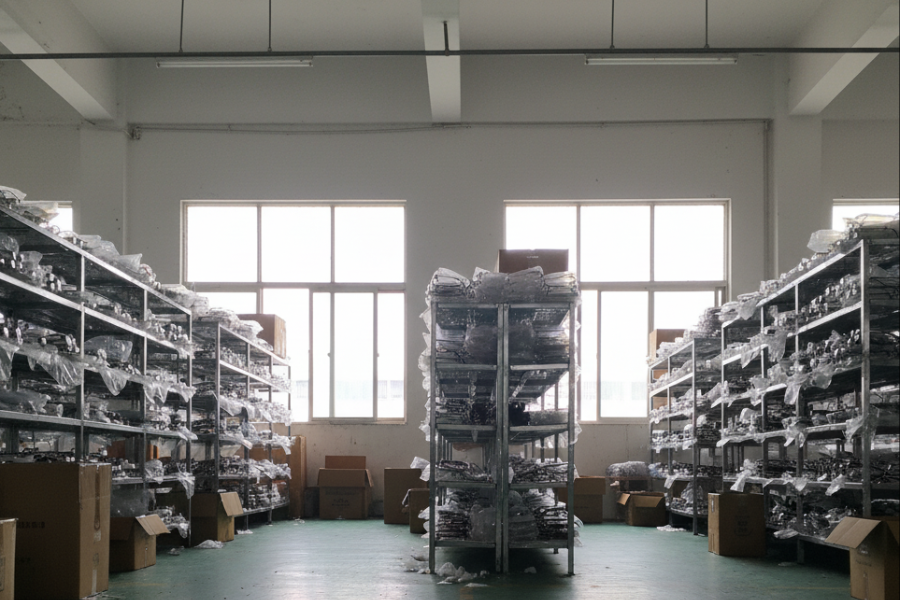
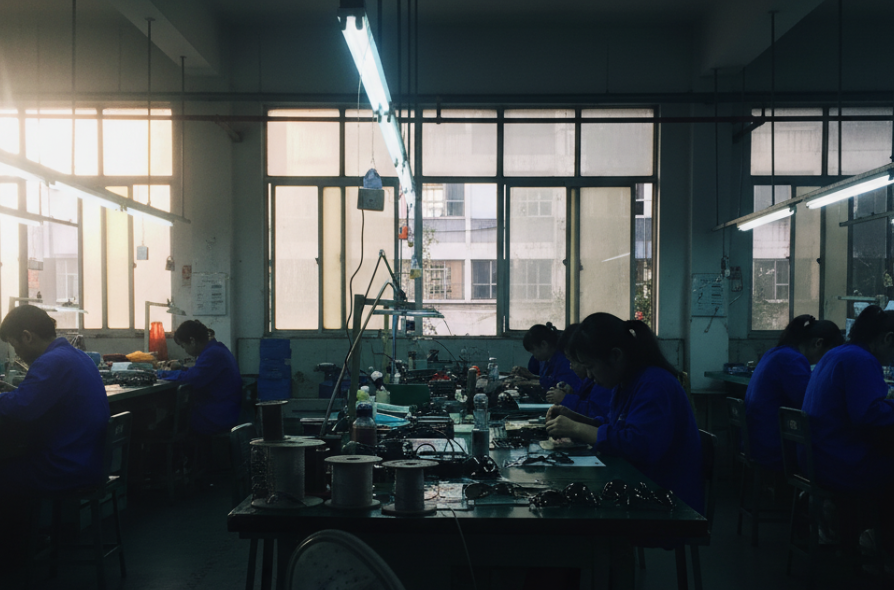
The scale of production in Zhejiang is world-class. Hundreds of millions of pairs of sunglasses are shipped from here to the rest of the world every year. But this isn't just a random assortment of factories; it's an ecosystem of terrifying efficiency. This "efficiency" is evident in every detail:
- Hyper-Specialization: In Taizhou's Duqiao area, you can find one street that only does temple polishing and another that specializes in lens coating. This extreme division of labor pushes the cost and efficiency of each process to its absolute limit. Wenzhou, on the other hand, has decades of accumulated experience in metalworking, boasting a complete and mature industrial chain from raw material drawing to electroplating.
- "Minute-Level" Supply Chain Response: Here, the hundreds of components needed for a single pair of glasses—from screws and hinges to nose pads—can be sourced from multiple suppliers within a few square kilometers. This "minute-level" support capability compresses sampling and production cycles to the extreme.
- Deep-Seated Cost Consciousness: Intense competition has instilled a near-religious devotion to cost control in the factories here. They will help you optimize mold structures to reduce waste or suggest more economical processes to achieve a similar aesthetic effect.
However, this region's greatest strength can also be its weakness. Because the ecosystem is so hyper-focused on "speed" and "cost," its responsiveness and technical reserves for designs requiring complex processes, top-tier materials, or disruptive innovation may be relatively insufficient.
What Forged Guangdong's Status as the "Quality Benchmark"?
Your brand is positioned in the mid-to-high-end, perhaps even affordable luxury, segment. Your customers pay a premium for "design" and "texture." You cannot tolerate any defects and need a partner who can understand and execute your exacting standards. Where do you find such a "master craftsman"?
Guangdong, especially the Pearl River Delta area centered around Shenzhen's Longgang district, is the sanctuary of high-end eyewear manufacturing in China, accounting for about 22% of exports. Here, the conversation isn't about volume; it's about quality. Its reputation is built on the technology, standards, and craftsmanship3 accumulated from long-term partnerships with top international brands.

If Zhejiang's factories are efficiently running production lines, many of Shenzhen's factories are more like tech labs or design studios. This sense of "quality" is forged from the following elements:
- Mastery of Top-Tier Materials: The daily discourse here revolves around the latest patterns from Italy's Mazzucchelli acetate, high-purity beta-titanium from Japan, medical-grade liquid silicone, and various aerospace-grade composite materials. They have extensive experience in mastering these premium materials.
- "Micron-Level" Precision Processes: Engineers here talk to you about the tolerances of 5-axis CNC carving, the thickness and uniformity of IP vacuum plating, and the strength of seamless laser welding. These are the critical details that determine whether a pair of glasses can be called a "luxury good."
- Aesthetic Synchronicity with Global Design: Thanks to its proximity to Hong Kong and long history of serving top European, American, and Japanese brands, the designers and engineers here have a profound understanding of global trends and brand aesthetics. They can quickly grasp your design intent and provide constructive suggestions for process optimization.
Of course, all of this comes at a significant cost. The investment in equipment, technical talent, and management standards is far higher than in other regions. But for a brand that sees quality as its lifeblood, this is a worthwhile investment.
Beyond the Two Giants, Are There Any "Hidden Champions" Worth Watching?
Your needs might be unique—not chasing the absolute lowest price, nor requiring luxury-grade craftsmanship3. Or perhaps your product's core advantage lies in a specific component, like the lens. So, what are the options beyond Zhejiang and Guangdong?
Absolutely. China's eyewear industry map is rich and diverse. Regions like Fujian, Jiangsu, and Jiangxi are like "special forces," each with unique skills that can provide unexpected value in specific areas.
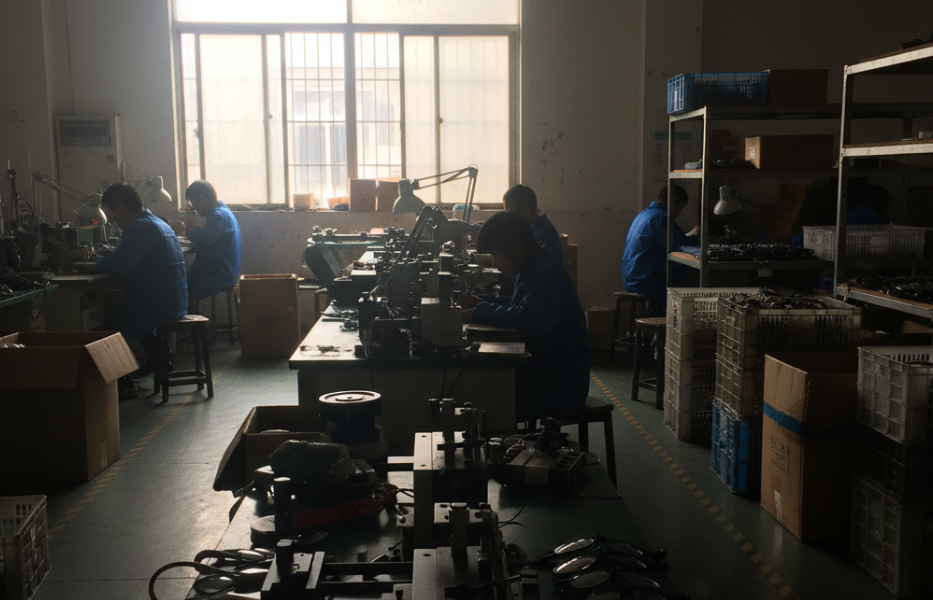
- Fujian (Xiamen): I call this region the "Reliable Honor Student." Fujian's eyewear industry, especially in Xiamen, which is famous for sports sunglasses and TR90 material4 frames, has long been an OEM for many world-renowned sports and fashion brands. They are well-managed, maintain stable quality, and are highly experienced in exporting, presenting a "perfect balance of quality and cost." If you are seeking a worry-free, reliable long-term partner, Fujian is definitely a key area to investigate.
- Jiangsu (Danyang): This is the "World Capital of Lenses," and that's no exaggeration. Although Danyang's output of complete frames is less than Zhejiang's, its position in the field of optical lenses is unshakeable. If your product's core selling point is the lens—be it the latest anti-blue light technology, photochromic transitions, or specialized polarized driving functions—then placing your lens procurement or R&D in Danyang and combining it with a frame factory from another region is a highly strategic move.
- Jiangxi (Yingtan): This is the "Ambitious Challenger." With strong government support, the Yujiang Eyewear Industrial Park in Yingtan is rising at an astonishing speed. They have attracted numerous companies from mature production areas like Wenzhou with preferential policies, bringing in valuable technology and management experience. By partnering with an emerging industrial park, you might gain more flexible cooperation terms and greater attention, giving you the chance to grow alongside a future giant.
How Do I Actually Choose the Right Manufacturing Region for My Brand?
You have the information, but the decision is still difficult. This isn't just about choosing a supplier; it's about selecting a strategic partner to grow with your brand. How do you make the smartest choice?
Forget about finding the "best" region and focus on finding the "best-fit" region for you. The decision should be based firmly on your brand's core strategy: Do you win with "value for money," lead with "design and quality," or break through with "technical innovation"?
Let's simulate the decision-making process with a few concrete scenarios:
-
Scenario 1: Fast-Fashion E-commerce Brand
- Core Need: Rapid response to trends, a massive number of SKUs, and extreme cost-effectiveness.
- Best Choice: Taizhou, Zhejiang. The flexible supply chain here can support your "small batch, multi-order" rapid turnover model, and their robust cost control5 capabilities will protect your profit margins.
-
Scenario 2: Designer or Crowdfunding Brand
- Core Need: Perfect execution of a unique design; quality is the brand's cornerstone and cannot be compromised.
- Best Choice: Shenzhen, Guangdong. The engineers here welcome challenges and can work with you to figure out the best process to turn your boldest ideas into reality.
-
Scenario 3: Functional Outdoor Sports Brand
- Core Need: The optical performance6 of the lens is paramount; frames must be lightweight and durable.
- Best Choice: Consider a "Hybrid Strategy." Customize top-tier functional lenses from Danyang, Jiangsu, and then have them assembled by a factory in Xiamen, Fujian, which has extensive experience with TR90 and other sports materials.
At Muton, the reason we've built deep partnerships across all these key regions is that we profoundly understand that only by precisely matching a client's unique needs with a region's unique strengths can we create value where 1+1 > 2.
Conclusion
The map of China's sunglasses industry is not a flat map; it's a three-dimensional chessboard. Each region is a piece with a distinct character. Your task is not to find the strongest piece, but to find the one that can work in synergy with your strategy to achieve victory together.
Understand the key elements that contribute to the success of luxury eyewear brands. ↩
Understand how export data can inform your business decisions in the global market. ↩
Explore the artistry and skill that elevate eyewear to luxury status. ↩
Learn about the advantages of TR90 material for lightweight and durable eyewear. ↩
Learn about cost control techniques that can help you maintain profitability in your business. ↩
Discover the critical aspects that affect lens quality and performance in eyewear. ↩