

You spent weeks perfecting a design, only for the first sample to be a letdown. Tiny, annoying scratches cover the surface, turning your cutting-edge concept into a cheap-looking product.
To perfectly polish acetate eyewear, you must start with high-quality, properly cured acetate1. This involves a multi-day, three-stage tumbling process2 with premium compounds, followed by meticulous multi-stage hand-polishing3 by experienced masters. Every single step is a critical quality control4 point.
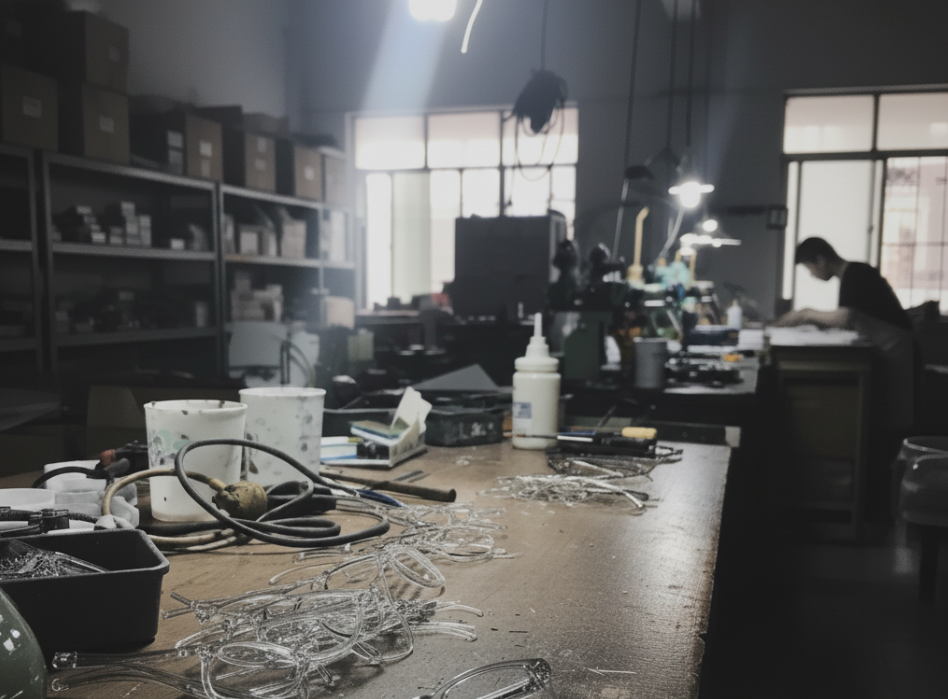
As someone also responsible for product development, I know the gap that can exist between a design on paper and a physical sample. I’ve felt that same frustration when a factory cuts corners and compromises the product's value. The quality of an acetate polish is the most direct test of a manufacturer's commitment to quality control4. Many see it as a final, rushed step. We see it as the pinnacle of our entire production philosophy5. It's a linked system where a mistake in step one guarantees failure at the end. Now, let's pull back the curtain and break down the process, step by step, to show you how we protect your product's final value.
Why is Using Cured, High-Quality Acetate the Only Place to Start?
Using cheap, freshly made acetate is the most common pitfall in eyewear manufacturing. It might save a few pennies per unit, but it leads to warped, cloudy frames that scratch easily. This guarantees future customer complaints and brand damage.
High-quality acetate, like that from renowned mills such as Mazzucchelli, must be properly cured for months. This "aging" process allows volatile plasticizers to escape, creating a denser, more stable, and chemically inert material. This stability is essential for achieving and maintaining a deep, lasting gloss.

As a product manager, you understand the importance of material science. Cellulose acetate isn't a simple, inert plastic; it's more active. When first produced, it is full of solvents and plasticizers that keep it malleable. If this "fresh" acetate is used too soon, these chemicals continue to leach out over the following months. This process, called outgassing6, subtly changes the surface texture7, causing a once-shiny finish to become dull and hazy over time. It also makes the frame more brittle.
Cured, premium acetate has had time to settle and stabilize. It's denser, harder, and chemically stable. When you polish it, you're working with a truly permanent surface. This is why we insist on sourcing from the best suppliers. We aren't just buying a color; we are buying the stability that defines the product's entire lifecycle. For your product, that means the sample you approve is the same quality product your customer receives a year later. That is the difference between a product designed for one sale and a product designed to build brand loyalty.
| Material Property | Technical Impact on Polishing | Impact on Your Project (and Profit) |
|---|---|---|
| Curing Time | Solvents fully outgas, creating a stable, non-porous surface. | The polish won't dull or haze over time, preventing warranty claims and protecting brand image. |
| Plasticizer Quality | High-grade plasticizers ensure long-term flexibility without brittleness or yellowing. | Frames maintain structural integrity and a premium feel8 during daily use, reducing breakage rates. |
| Sheet Consistency | Superior mixing and pressing prevent internal bubbles or "slugs." | Prevents tiny pits or imperfections from appearing during polishing, lowering the scrap rate and controlling costs. |
| Supplier Reputation | Mills like Mazzucchelli have centuries of R&D behind their colors and material science. | Secures unparalleled color depth, pattern complexity, and batch-to-batch consistency for your product. |
How Does a Three-Stage Tumbling Process Create the Perfect Canvas?
A raw frame coming off a CNC machine is covered in tiny tool marks and has sharp edges. Taking a polishing wheel directly to this surface results in a wavy, distorted finish known as "sinking." Only a patient, multi-day, and precisely controlled tumbling process2 can create the perfectly smooth, uniform canvas for the final polish.
Our tumbling is a precisely controlled 72- to 96-hour process. It's broken into three distinct stages—deburring, smoothing, and glossing—each using different media sizes and proprietary compounds to systematically take the frame surface from rough to pre-polished.
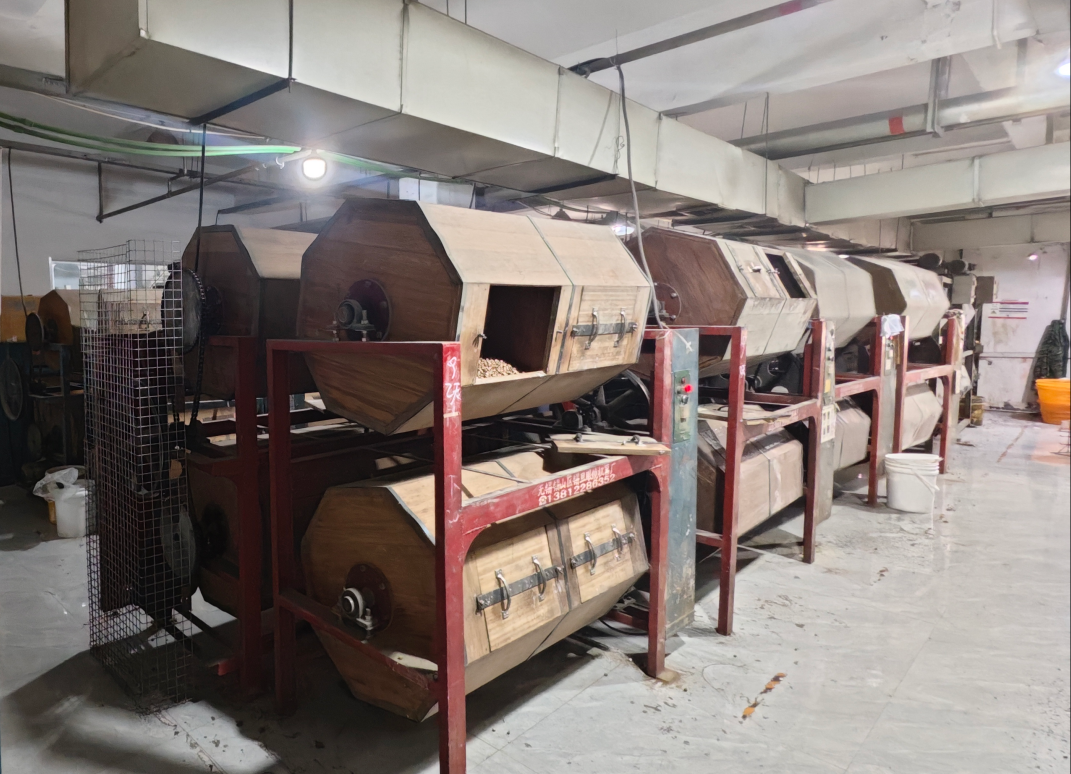
The process is a science of controlled abrasion. Think of it like using progressively finer grits of sandpaper, but on the entire surface of the frame at once.
- Stage One: Deburring (The Cut-Down). For the first 24+ hours, frames are tumbled with larger, angled pieces of beechwood and a gentle, pumice-based abrasive compound. The goal here is aggressive but uniform: to knock off all sharp machined edges and remove the visible tool marks. This is the foundational step that creates the soft, comfortable contours of the final product.
- Stage Two: Smoothing (The Refinement). The frames are then cleaned and moved to a new barrel with smaller, smoother media, like bamboo pegs, and a finer abrasive paste. This stage runs for another 24+ hours. Its sole purpose is to remove the microscopic scratches left by Stage One, creating a perfectly uniform, satin-matte finish. The frame feels very smooth to the touch at this point, but it has no shine.
- Stage Three: Glossing (The Pre-Polish). For the final 24+ hours, the frames are tumbled with very soft media, like tiny felt cubes, and a high-grade carnauba wax polishing compound. This is less about abrasion and more about a friction process that heats and flows the very top layer of the acetate, bringing out the initial luster.
Rushing this or using cheap, greasy compounds is a common shortcut. It saves time but leaves a subtle "orange peel" texture and the oils can impregnate the acetate, preventing a truly deep final polish. Here, patience isn't a virtue; it's a technical requirement.
Why Can't the Hand-Polish of a Skilled Master Be Automated?
Even after days of tumbling, a frame has some shine, but it still lacks the "life" and flawless clarity of high-end eyewear. It doesn't have that liquid-glass look. This final, critical transformation can only be achieved by the eye and touch of a skilled technician.
An experienced polisher uses a series of different wheels—from hard sisal to soft cotton—and various polishing compounds to meticulously work every surface. They control heat and pressure by feel, ensuring a flawless, distortion-free finish9 that machines cannot replicate, especially on complex curves like the nose bridge and hinge areas.

Watching an experienced master at work is a study in skill and feel. It is a precision operation that requires constant judgment. First, they use a harder wheel, often made of sisal, with a "cutting" compound to remove the very last bit of texture left over from tumbling. This step ensures the surface is absolutely flat and ready. Next, they move to a stitched cotton wheel with a finer Tripoli compound. This is where the real shine starts to build. The skill is in managing the heat from friction. Too much, and you melt or "burn" the acetate, leaving a permanent flaw. Too little, and you won't get a deep gloss. They feel all of this through their hands and adjust pressure and movement in fractions of a second. The final step is done on a loose, incredibly soft cotton wheel with a jewelry-grade finishing rouge or wax. This step removes any microscopic swirl marks left by the previous wheel and brings the gloss to its peak. They constantly rotate the frame, hitting it from multiple directions to create a surface that is optically pure10 and reflects light without any distortion. This level of nuance and adaptability is currently impossible for any automated system.
Why Do Most Polishing Shortcuts Ultimately Fail?
In a competitive market, factories are always tempted to cut corners to lower their price. Polishing is labor- and time-intensive, making it a prime target for shortcuts. However, these shortcuts inevitably lead to quality issues that damage a brand's reputation.
Common shortcuts, like single-stage tumbling, skipping hand-polishing11 stages, or using "all-in-one" glossing agents, create only a superficial shine. These methods fail to properly prepare the surface, leaving behind hidden imperfections that result in a shallow gloss, hazy surfaces, and a product that scratches very easily.

As the person in charge of the product, it's critical to know what these shortcuts look like so you can identify potential supply chain risks.
- "All-in-One" Tumble: Some factories try to do the entire tumbling process2 in 24 hours with one medium-grit compound. This just rounds the edges but never truly smooths the surface. It’s like sanding a piece of wood with only 120-grit paper; you can never get it smooth enough for a fine varnish.
- Skipping the First Wheel: The polisher might go straight from the tumbled frame to the final soft wheel. This saves a few minutes per frame, but it never removes the underlying surface texture7. The result is a shiny but uneven frame that looks distorted under bright light.
- Over-reliance on Chemical Sprays: The worst shortcut is using a chemical glossing spray after a quick, careless polish. This creates a temporary wet look that appears bright in the box but wipes off and often gets sticky or hazy over time, almost guaranteeing customer returns.
These shortcuts don't just compromise the look; they compromise the durability of the finish. A properly prepared and polished surface is denser and more resistant to minor scratches. A superficial shine is fragile. We refuse to take these shortcuts because we know that true brand value is built on consistency and reliability, not on initial appearances.
Conclusion
A perfect polish isn't an accident; it is the product of an uncompromising system. It is a chain of quality that starts with aged, premium material and ends in the hands of a skilled master, with every step in between executed with patience and precision.
Learn about the significance of curing acetate for achieving a lasting finish. ↩
Get insights into the tumbling process that prepares acetate frames for polishing. ↩
Understand the importance of skilled hand-polishing for achieving high-end eyewear quality. ↩
Find out how rigorous quality control measures ensure superior eyewear products. ↩
Understand the principles that guide the production of premium eyewear. ↩
Learn how outgassing affects the quality and longevity of acetate frames. ↩
Learn about the impact of surface texture on the appearance and durability of eyewear. ↩
Explore the factors that enhance the tactile experience of high-quality eyewear. ↩
Learn about the techniques used to ensure a distortion-free finish on eyewear. ↩
Understand the significance of optical purity in enhancing eyewear clarity. ↩
Explore the benefits of hand-polishing in creating a flawless eyewear finish. ↩